Introduction Large Language Models (LLMs) have transformed the artificial intelligence landscape. From intelligent chatbots and AI agents to enterprise copilots and advanced search systems, these models depend on one critical resource: high-quality training data. In the early stages of AI development, most training datasets were assembled from publicly available internet content. While this approach enabled …

Introduction
Large Language Models (LLMs) have transformed the artificial intelligence landscape. From intelligent chatbots and AI agents to enterprise copilots and advanced search systems, these models depend on one critical resource: high-quality training data.
In the early stages of AI development, most training datasets were assembled from publicly available internet content. While this approach enabled rapid progress, it also introduced challenges related to quality, reliability, intellectual property rights, and long-term sustainability.
Today, many AI companies are actively seeking licensed content, particularly books, to strengthen their training datasets.
Books represent one of the richest forms of human knowledge ever created. They contain deep subject expertise, structured narratives, editorial oversight, and long-form reasoning that are difficult to find in fragmented web content.
As a result, licensed books are becoming increasingly important for organizations building the next generation of Large Language Models.
This article explores how AI companies source licensed books, why they are investing in content licensing, and what content providers can do to participate in this rapidly growing market.
Why Books Are Valuable for AI Training
Books offer several advantages that make them highly attractive for AI development.
Unlike short-form internet content, books are designed to provide comprehensive coverage of a topic.
They typically include:
- Extensive explanations
- Structured arguments
- Detailed narratives
- Context-rich information
- Professional editing
- Expert knowledge
These characteristics help AI systems learn more effectively.
Long-Form Learning
One of the greatest strengths of books is their ability to present ideas across hundreds of pages.
This teaches AI models:
- Context retention
- Logical progression
- Complex reasoning
- Relationship mapping between concepts
As AI systems increasingly support research, education, and enterprise workflows, these capabilities become extremely valuable.
High Editorial Standards
Published books generally undergo:
- Editorial review
- Fact checking
- Proofreading
- Quality assurance
This results in content that is often more reliable than unverified internet sources.
For AI developers, higher-quality input data frequently leads to higher-quality model outputs.
Diverse Knowledge Domains
Books cover virtually every field of human knowledge, including:
- Science
- Technology
- Business
- History
- Philosophy
- Literature
- Education
- Medicine
- Law
This diversity helps create balanced and comprehensive training datasets.
The Shift from Data Collection to Data Acquisition
The AI industry is undergoing a significant transformation.
In the past, the primary challenge was collecting enough data.
Today, the challenge is acquiring the right data.
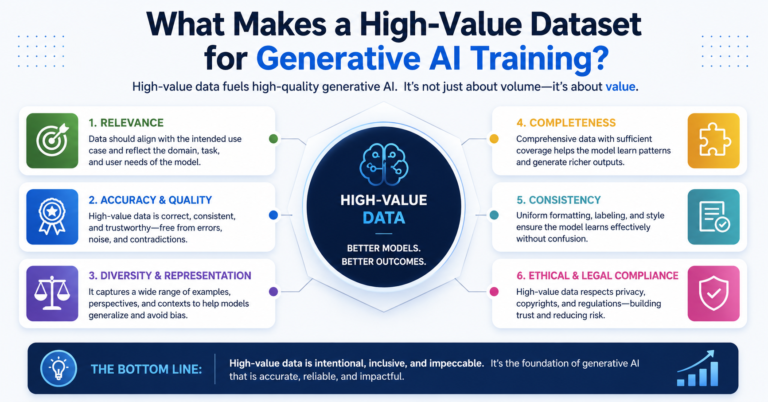
Modern AI companies increasingly evaluate datasets based on:
- Quality
- Rights availability
- Traceability
- Domain expertise
- Commercial usability
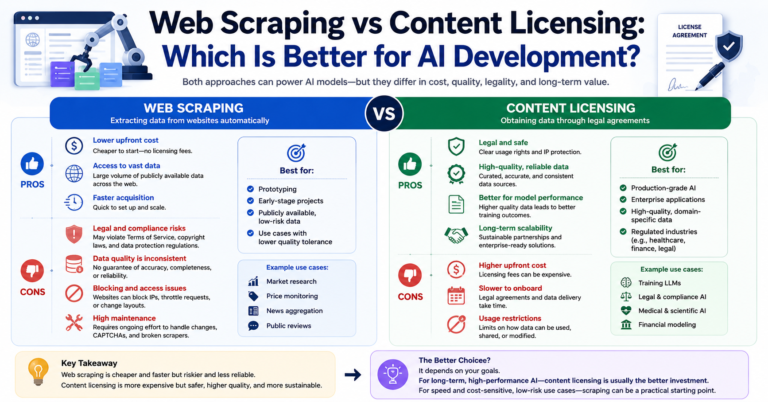
This shift has created a growing demand for licensed content sources.
Rather than relying exclusively on large-scale web scraping, organizations are developing structured content acquisition strategies.
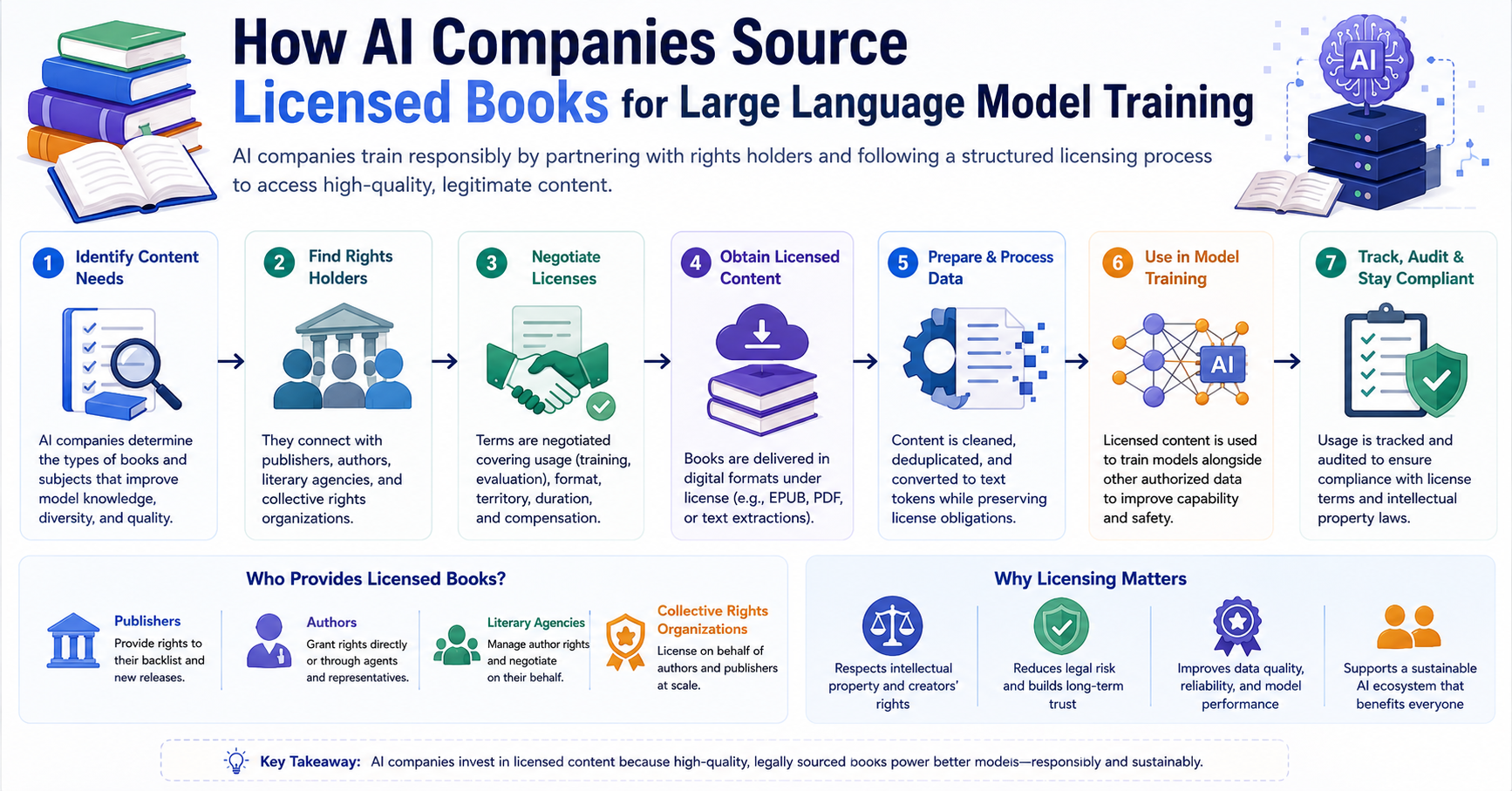
How AI Companies Source Licensed Books
There is no single method used across the industry.
Different organizations acquire licensed books through different channels depending on their goals, budgets, and legal requirements.
1. Direct Publisher Partnerships
One of the most common approaches is establishing direct relationships with publishers.
Publishers control extensive catalogs of professionally produced content and often possess clear rights documentation.
Through licensing agreements, AI companies may gain access to:
- Current titles
- Backlist catalogs
- Educational content
- Reference materials
- Professional publications
Direct partnerships provide several advantages:
Rights Clarity
The licensing process clearly defines how content may be used.
Consistent Supply
Publishers can provide large volumes of content over time.
Metadata Availability
Many publishers maintain detailed metadata that improves dataset organization.
2. Content Licensing Platforms
As the market matures, specialized content licensing platforms are emerging.
These platforms help connect:
Content Owners
- Publishers
- Authors
- Literary agencies
- Rights holders
with
Content Buyers
- AI companies
- Foundation model developers
- Research organizations
- Enterprise AI vendors
Licensing platforms simplify discovery, negotiation, rights management, and content delivery.
For many AI companies, marketplaces provide an efficient alternative to negotiating hundreds of individual agreements.
3. Literary Agencies and Rights Organizations
Literary agencies often represent large portfolios of authors and intellectual property.
AI companies may work with these organizations to access:
- Book collections
- Author archives
- Specialty content
- Multi-title licensing opportunities
This approach can streamline negotiations and reduce acquisition complexity.
4. Educational and Academic Publishers
Educational content is particularly valuable for AI systems because it is designed to explain concepts clearly and accurately.
AI companies frequently seek:
- Textbooks
- Learning materials
- Professional certifications
- Academic publications
- Reference guides
These resources help improve reasoning and instructional capabilities within language models.
What AI Companies Look for When Licensing Books
Not all content has equal value.
AI developers evaluate books using several criteria.
Content Quality
Professional editing and strong writing standards remain essential.
High-quality content generally produces better training outcomes.
Domain Expertise
Books written by recognized experts often provide greater value than generic content.
Specialized knowledge is particularly important for enterprise AI applications.
Diversity
AI systems benefit from exposure to multiple perspectives and content types.
A diverse dataset may include:
- Fiction
- Non-fiction
- Educational works
- Technical publications
- Historical materials
Rights Availability
Licensing agreements must clearly define:
- Permitted uses
- Commercial rights
- Geographic scope
- Duration
- Data handling requirements
Rights clarity is often a major factor in acquisition decisions.
Scale
AI developers frequently require large volumes of content.
Content providers capable of supporting substantial datasets often attract greater interest.
The Role of Metadata in AI Content Acquisition
Content alone is not enough.
Metadata plays a crucial role in modern AI datasets.
Useful metadata may include:
- Title
- Author
- Publication date
- Subject category
- Language
- Genre
- Keywords
- Rights information
Metadata improves:
- Dataset management
- Content filtering
- Quality control
- Model evaluation
Organizations that provide well-structured metadata often become preferred partners.
Why Licensed Books Help Build Better LLMs
Large Language Models learn patterns from the data they consume.
Books contribute several unique strengths.
Better Reasoning
Long-form explanations help models learn logical thinking patterns.
Rich Vocabulary
Books expose models to broader language usage than many web sources.
Contextual Understanding
Extended narratives teach relationships between events, concepts, and ideas.
Subject Depth
Books often explore topics far more deeply than articles or blog posts.
These characteristics contribute to stronger model performance.
The Growing Importance of Compliance
As AI adoption accelerates, legal and regulatory considerations are becoming increasingly important.
Organizations deploying commercial AI systems must address questions such as:
- Where did the data originate?
- Was it legally acquired?
- Can it be used commercially?
- What rights govern future use?
Licensed books help answer these questions.
Content acquired through formal agreements provides greater transparency and predictability.
For enterprise buyers, this can significantly reduce risk.
Emerging Trends in AI Content Licensing
Several trends are shaping the future of book licensing for AI.
Increased Demand for Premium Content
AI companies are increasingly prioritizing quality over quantity.
Expansion of Publisher Partnerships
More publishers are exploring licensing opportunities within the AI ecosystem.
Growth of Specialized Content Marketplaces
Dedicated licensing platforms are making content acquisition more efficient.
Greater Focus on Responsible AI
Organizations are placing greater emphasis on transparent and ethical data sourcing.
Enterprise Adoption
As businesses deploy AI at scale, demand for trusted training data continues to grow.
How Content Providers Can Participate
Publishers and rights holders interested in AI licensing should focus on:
Content Organization
Maintain clean digital archives and structured catalogs.
Rights Documentation
Ensure ownership and licensing rights are clearly documented.
Metadata Quality
Create consistent metadata standards.
Catalog Diversity
Offer content across multiple subjects and formats.
Long-Term Partnerships
Develop scalable licensing frameworks that support ongoing collaboration.
Organizations that prepare for AI licensing today may benefit from growing demand over the coming years.
The Future of Licensed Books in AI Development
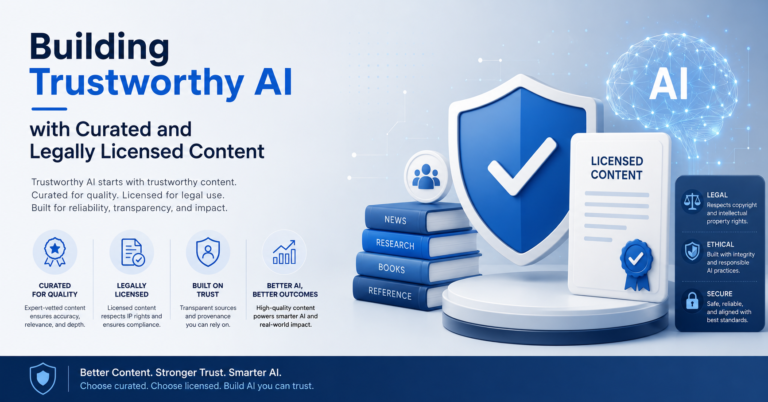
The AI industry is moving toward a future where content quality, transparency, and legal certainty are as important as dataset size.
Books occupy a unique position within this ecosystem.
They combine:
- Human expertise
- Editorial quality
- Knowledge depth
- Structured learning
As AI systems become increasingly sophisticated, these qualities are likely to become even more valuable.
Licensed books are no longer simply a source of information.
They are becoming strategic assets for AI development.
Conclusion
The way AI companies acquire training data is evolving rapidly.
While publicly available internet content remains important, licensed books are emerging as one of the most valuable resources for Large Language Model training.
Their combination of quality, depth, structure, and rights clarity makes them particularly attractive for organizations building advanced AI systems.
As demand for trustworthy and high-performing AI grows, partnerships between content owners and AI companies will play an increasingly important role in shaping the future of artificial intelligence.
For AI developers, licensed books offer a path toward stronger, safer, and more sustainable models.
About Bookscape
Bookscape helps AI companies discover and license high-quality books, publishing catalogs, and rights-cleared content for Large Language Model training, generative AI applications, enterprise AI systems, and knowledge platforms.
We work with publishers, authors, literary agencies, and content owners to build scalable content licensing solutions that support the future of responsible AI.