Introduction Artificial intelligence has advanced at an extraordinary pace over the past few years. Large Language Models (LLMs), generative AI systems, AI agents, enterprise copilots, and intelligent search platforms are transforming how businesses operate and how people access information. Behind every successful AI model lies one critical ingredient: training data. For years, AI developers focused …

Introduction
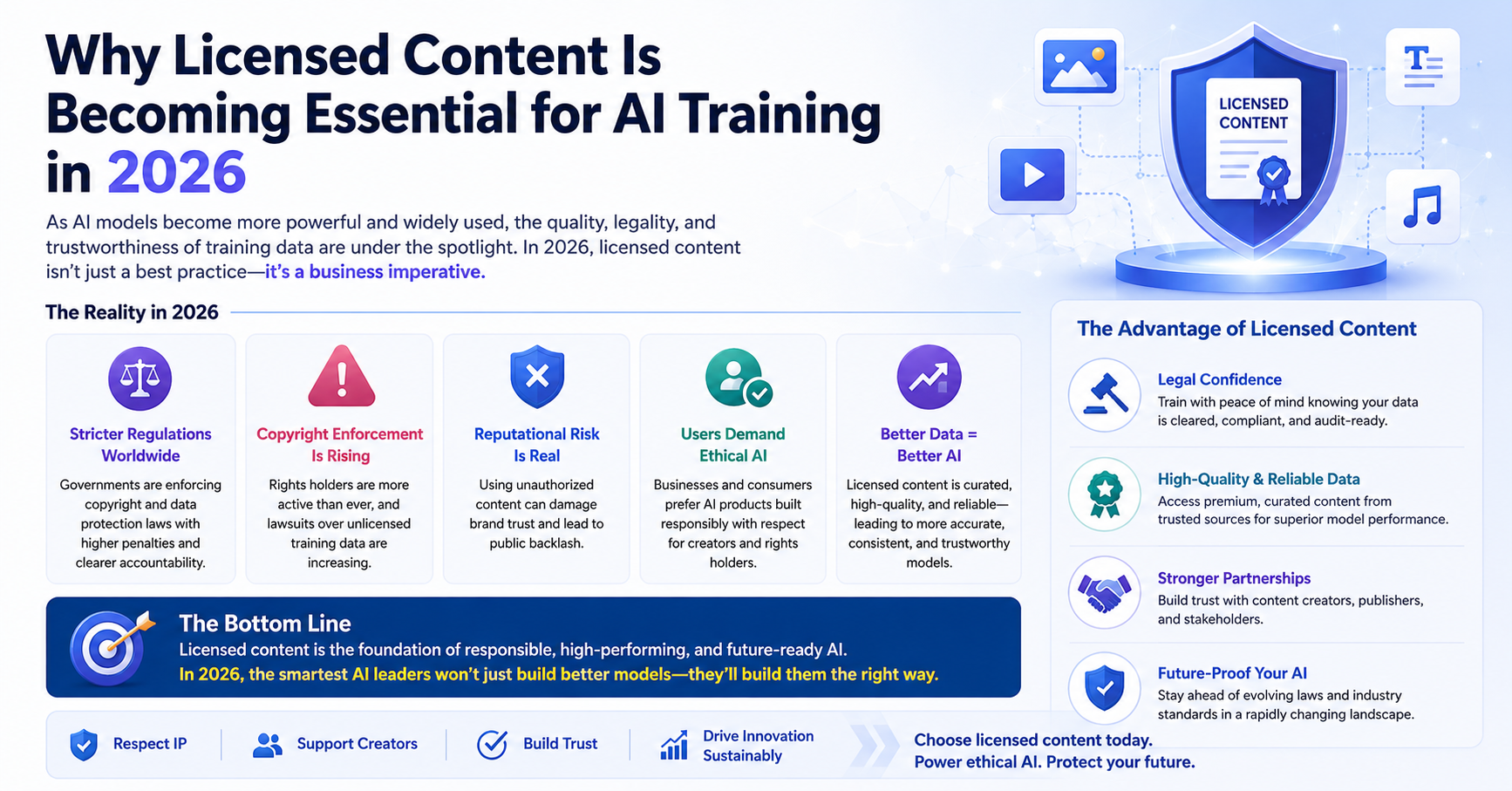
Artificial intelligence has advanced at an extraordinary pace over the past few years. Large Language Models (LLMs), generative AI systems, AI agents, enterprise copilots, and intelligent search platforms are transforming how businesses operate and how people access information.
Behind every successful AI model lies one critical ingredient: training data.
For years, AI developers focused primarily on collecting as much data as possible. The prevailing belief was that larger datasets would automatically lead to better-performing models. While scale remains important, the AI industry is increasingly realizing that data quality, legal certainty, and content reliability are equally important.
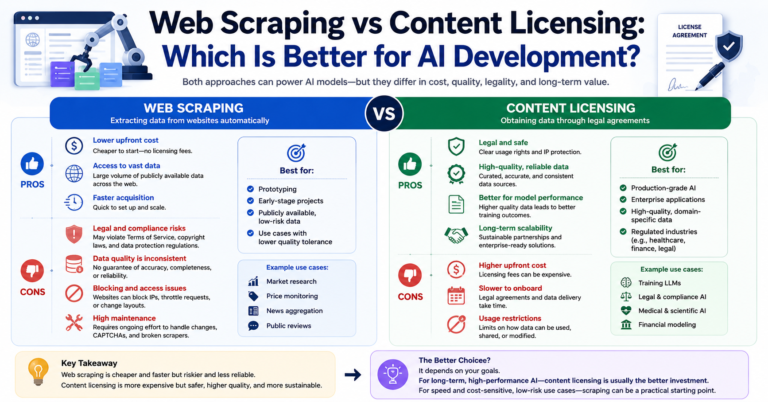
As we move through 2026, licensed content is becoming a strategic asset for AI companies worldwide. Rather than relying solely on scraped internet content, many organizations are investing in licensed books, journals, research publications, educational materials, and professionally curated datasets.
This shift is not simply about compliance. It is about building stronger, more accurate, and more trustworthy AI systems.
The Evolution of AI Training Data
The first generation of modern AI models relied heavily on publicly available web content.
The internet offered an enormous volume of material, including:
- Blogs
- Forums
- News articles
- Public websites
- Open repositories
- Social discussions
This approach enabled rapid experimentation and model development.
However, as AI systems became more sophisticated, limitations began to emerge.
Developers discovered that internet-scale data often includes:
- Duplicate information
- Outdated content
- Low-quality writing
- Spam pages
- Misinformation
- AI-generated text
- Inconsistent formatting
These issues can affect model accuracy and reliability.
As organizations increasingly deploy AI in enterprise, healthcare, finance, legal, and educational environments, data quality has become a business-critical concern.
Why Data Quality Matters More Than Ever
Modern AI systems are expected to perform complex tasks such as:
- Research assistance
- Business analysis
- Content generation
- Customer support
- Legal document review
- Educational tutoring
- Knowledge retrieval
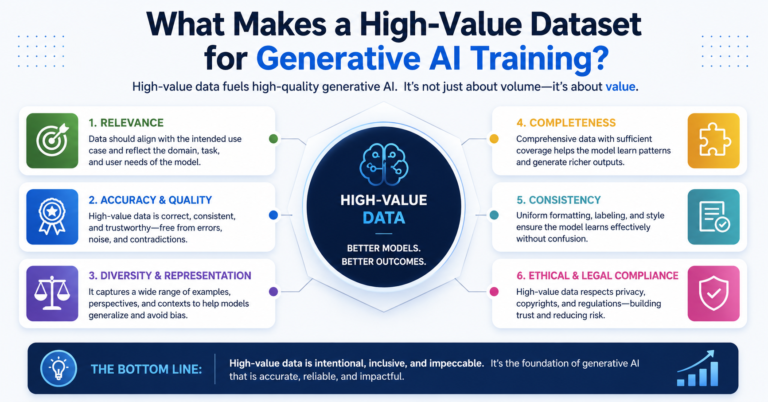
To perform these tasks effectively, AI models need exposure to high-quality knowledge sources during training.
Licensed content often provides significant advantages over random internet data because it has typically undergone professional review and editorial processes.
Professionally published content usually offers:
Better Accuracy
Editors, reviewers, and subject matter experts help ensure factual correctness.
Stronger Structure
Books and professional publications follow logical frameworks that improve machine learning outcomes.
Rich Context
Long-form content helps models learn relationships between concepts.
Specialized Knowledge
Many books contain expertise unavailable through general web sources.
As a result, licensed content contributes to more capable and reliable AI systems.
The Growing Importance of Copyright Compliance
One of the biggest developments in the AI industry is the growing focus on intellectual property rights.
Content creators, publishers, authors, and media organizations are increasingly asking important questions:
- How is content being used?
- Who benefits from AI training?
- What rights exist for content owners?
- How should content licensing work?
These questions are reshaping how AI companies acquire data.
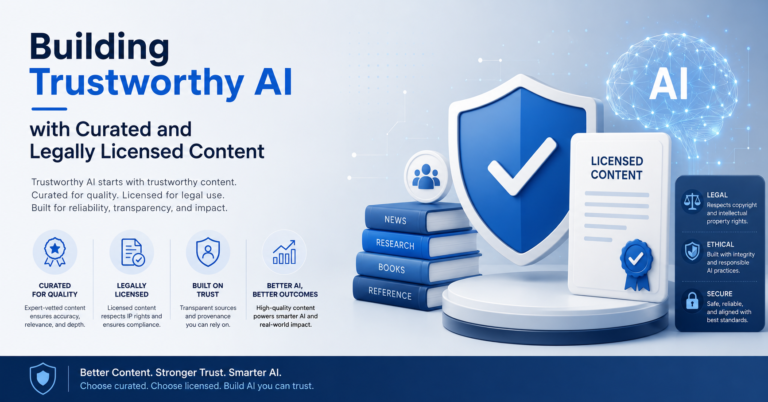
Organizations that build commercial AI products increasingly prefer datasets with clear licensing terms and documented usage rights.
Licensed content provides:
- Legal clarity
- Defined permissions
- Reduced litigation risk
- Long-term business certainty
For enterprises investing millions of dollars in AI development, these factors are becoming essential.
Why Books Are Emerging as Premium AI Training Assets
Among all forms of content, books represent one of the most valuable resources for AI training.
Books differ from typical web content in several important ways.
Deep Knowledge
Books often explore topics in significant depth rather than providing surface-level information.
This helps AI systems learn:
- Detailed explanations
- Advanced reasoning
- Subject relationships
- Domain-specific terminology
Long-Form Context
A book may contain tens of thousands of words connected through a coherent narrative or logical structure.
This teaches AI models how ideas evolve over extended contexts.
Long-context learning is increasingly important for:
- AI agents
- Enterprise copilots
- Research assistants
- Knowledge retrieval systems
Human Expertise
Books are often written by experts who have spent years developing knowledge in their fields.
This expertise adds substantial value to training datasets.
The Rise of Enterprise AI and Trusted Data Sources
The next wave of AI adoption is being driven by enterprises rather than individual consumers.
Businesses expect AI systems to:
- Produce accurate outputs
- Reduce hallucinations
- Support decision-making
- Protect intellectual property
- Meet regulatory requirements
To satisfy these expectations, enterprises increasingly prefer AI systems trained on trusted and traceable content sources.
Licensed datasets help establish trust because organizations know:
- Where the content originated
- How it was acquired
- What rights govern its use
This transparency is becoming a major competitive advantage.
Why AI Companies Are Investing in Licensed Content
Several factors are accelerating the adoption of licensed content.
Improved Model Performance
High-quality datasets often produce better outputs than larger collections of low-quality data.
Developers increasingly recognize that quality can outweigh quantity.
Reduced Legal Risk
Clear licensing agreements reduce uncertainty surrounding future model deployment and commercialization.
Stronger Brand Reputation
Organizations using ethically sourced content demonstrate commitment to responsible AI development.
This can strengthen relationships with:
- Customers
- Investors
- Regulators
- Enterprise clients
Sustainable Data Access
Licensing agreements create predictable long-term access to valuable content resources.
This supports continuous model improvement.
Licensed Content and the Future of Responsible AI
Responsible AI has become a major priority across industries.
Responsible AI principles typically include:
- Transparency
- Accountability
- Fairness
- Privacy
- Trustworthiness
Content sourcing is increasingly viewed as part of responsible AI development.
Organizations are recognizing that responsible AI begins with responsible data acquisition.
Licensed content supports this goal by ensuring that creators, publishers, and rights holders participate in the AI value chain.
This creates a healthier and more sustainable ecosystem for everyone involved.
What AI Buyers Should Look for in Licensed Content
AI companies evaluating content partnerships should consider several factors.
Content Quality
The content should be professionally produced and well-edited.
Rights Clarity
Licensing agreements should clearly define permitted uses.
Diversity of Content
Strong datasets often include:
- Fiction
- Non-fiction
- Educational materials
- Professional publications
- Reference works
Scalability
Content providers should be capable of supporting growing data requirements.
Metadata Availability
Structured metadata improves dataset usability and management.
The Emerging AI Content Economy
A new content economy is taking shape.
Historically, publishers generated revenue through:
- Print sales
- Digital sales
- Subscriptions
- Licensing for film and television
Today, AI licensing is emerging as an additional opportunity.
At the same time, AI companies gain access to reliable, professionally created content that can improve model performance.
This alignment creates mutual value for both sides.
The result is a growing ecosystem where publishers, authors, rights holders, and AI developers collaborate rather than compete.
Why Licensed Content Will Define the Next Generation of AI
The future of AI is unlikely to be built solely on larger datasets.
Instead, competitive advantage will increasingly come from:
- Better data
- Trusted sources
- Stronger rights management
- Higher content quality
- Responsible acquisition practices
Licensed content addresses all of these requirements.
As AI systems become more deeply integrated into business operations and everyday life, organizations will need data sources that support accuracy, transparency, and long-term sustainability.
Licensed content is uniquely positioned to meet those needs.
Conclusion
The AI industry is entering a new era.
The conversation is no longer just about how much data can be collected. It is about where that data comes from, how it is acquired, and whether it can support the development of trustworthy AI systems.
Licensed content provides a compelling answer.
By offering legal certainty, superior quality, expert knowledge, and sustainable access, licensed content is becoming one of the most valuable resources in modern AI development.
For AI companies seeking long-term success, investing in licensed content is increasingly becoming a strategic necessity rather than an optional advantage.
About Bookscape
Bookscape helps AI companies access high-quality, rights-cleared books and premium publishing content for Large Language Model training, generative AI applications, AI agents, and enterprise knowledge systems. We work with publishers, authors, literary agencies, and content owners to create compliant, scalable, and high-value content licensing solutions for the AI industry